Custom Screen Printing in Southwest Florida
Bold, durable ink on tees, hoodies, tanks and more. The go-to for team, crew and event orders.
Screen printing is still the gold standard for custom apparel, and it’s what we built this shop on. Each color in your design gets its own screen, ink is pushed through the mesh by hand or press, then heat-cured so it survives years of washes, job sites and Gulf Coast sun. If you need a stack of shirts that look identical and hold up, this is the method.
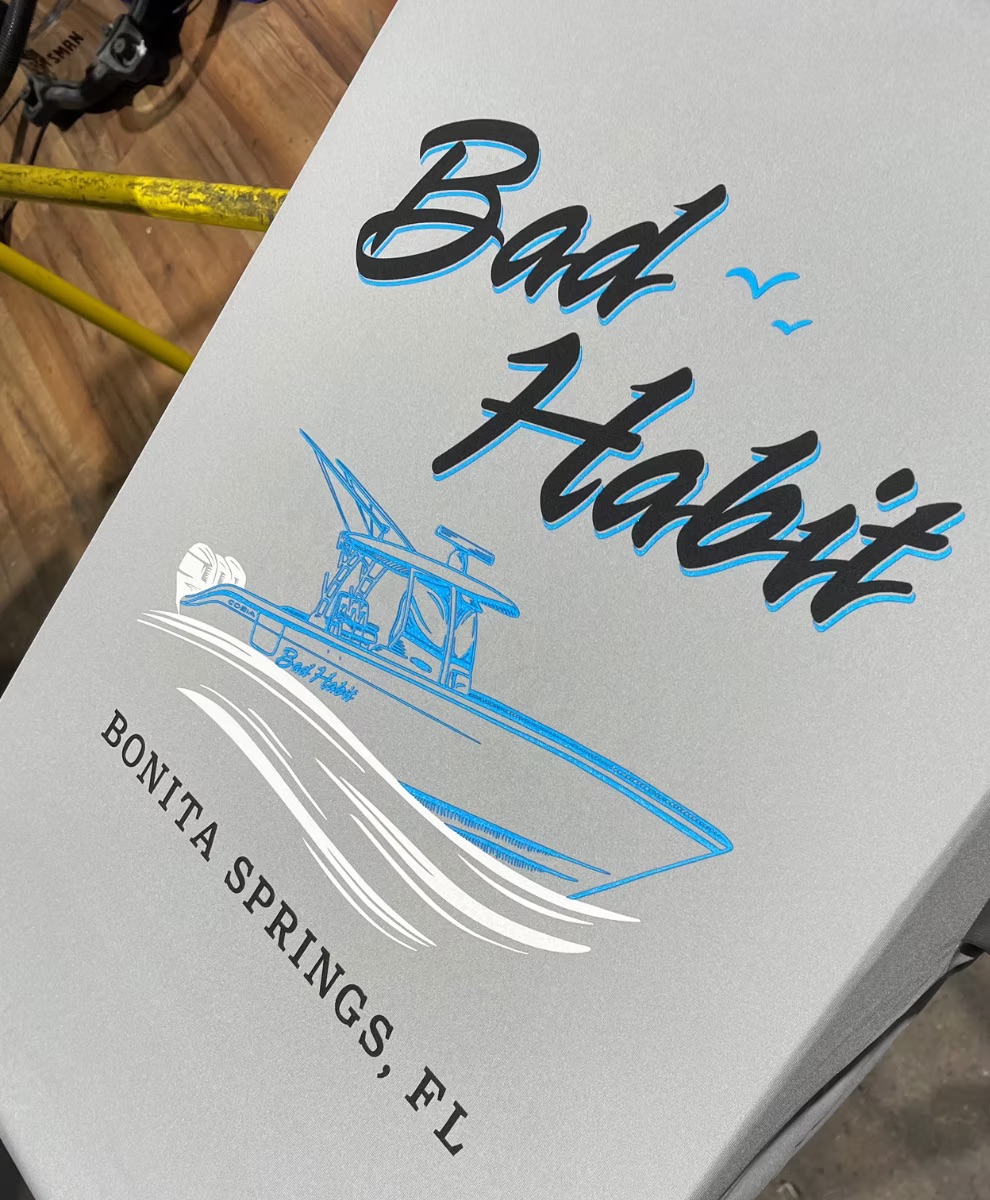
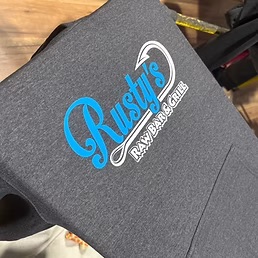
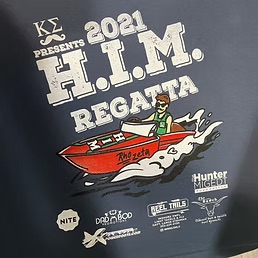
Recent screen printing
Why people choose it
- Vivid, opaque color. Plastisol and water-based inks that pop on light or dark garments.
- Built to last. Properly cured prints won’t crack or fade after a few washes.
- Better price at volume. Once screens are made, every extra shirt costs less.
- Specialty options. Ask about soft-hand, metallic, puff and glow inks.
Good for
- Company & crew shirts
- Soccer leagues & youth clubs
- Team and league uniforms
- Event, race & fundraiser tees
- Band and brand merch
- School, club & church shirts
- Bulk giveaways
- Startups that need merch fast
We put it on
- T-shirts (cotton, blends, tri-blends)
- Performance & dry-fit shirts
- Long sleeves & sun shirts
- Hoodies & crewnecks
- Tank tops
- Tote bags & aprons
How it works
- Send your art. A logo file, a sketch on a napkin, whatever you have. Tell us quantities and your date.
- Get a price and proof. We tell you the best way to print it and send a mockup to sign off on.
- We print it. Everything is printed, stitched or imprinted in our Fort Myers shop.
- Pick up or ship. Grab it at the shop if you are local. We ship anywhere else in Florida.
Common questions
How many colors can you print?
Most designs run from one to several colors. Every color uses its own screen, so fewer colors usually means a lower price per shirt. Send us your art and we’ll quote it exactly.
Do you have a minimum order?
The screen printing minimum is 24 pieces. Need fewer? Embroidery starts at 6 pieces, and DTF and heat transfers work well for small runs. Call or email with your quantity and we’ll tell you the best method for your budget.
Can you match my brand colors?
Yes. Send us your logo file and Pantone colors if you have them, and we’ll match ink as closely as possible and show you a proof before we print.
What file should I send?
Vector files (AI, EPS, PDF, SVG) are ideal. High-resolution PNGs work too. No file? We can help clean up or recreate your logo.
Custom Screen Printing near you
We do custom screen printing for customers all over Southwest Florida, including:
Lee County: Fort Myers, Cape Coral, Lehigh Acres, Bonita Springs, Estero, Fort Myers Beach, Sanibel, North Fort Myers, San Carlos Park, Gateway, Pine Island, Alva
Collier County: Naples, North Naples, Marco Island, Golden Gate, Immokalee, Ave Maria, Everglades City
Charlotte County: Port Charlotte, Punta Gorda, Englewood, Rotonda West, Babcock Ranch, Charlotte Harbor
Outside SWFL? We ship custom screen printing orders to Miami, Tampa, Orlando, Jacksonville and everywhere else in Florida.
Also see custom embroidery, custom hats, promotional products.
The in-depth guide
What is screen printing?
Screen printing is a stencil process. A fine polyester mesh is stretched tight on a frame and coated with a light-sensitive emulsion. Your artwork is printed onto film, laid on the coated screen and exposed to light. Wherever the art blocks the light, the emulsion stays soft and washes out, leaving open mesh in the exact shape of your design. That screen goes on the press, a shirt goes on the platen underneath, ink is flooded across the screen and a squeegee pushes it through the open mesh onto the fabric.
Every color in a design gets its own screen. A three-color logo means three screens, lined up so each color lands exactly where it should. After the last color goes down, the shirt runs through a dryer that cures the ink. Curing is what makes a print last. Plastisol ink, the most common shirt ink, has to reach roughly 320°F all the way through to fully cure. Under-cured prints are the reason cheap shirts crack and peel after a few washes, so this is one step we never rush.
Plastisol, water-based and specialty inks
Plastisol is the workhorse. It sits on top of the fabric, gives bright, opaque color on both light and dark shirts, and holds up well. It has a slightly raised feel, especially on dark garments where a white underbase is printed first.
Water-based ink soaks into the fibers instead of sitting on top. The result is a very soft print you can barely feel, which is why a lot of retail brands like it. It works best on light colored, cotton-heavy shirts.
Discharge ink removes the dye from a dark cotton shirt and replaces it with color, giving a soft, vintage look on dark garments. It only works on certain fabrics, so ask before you plan around it.
Specialty inks include puff (raised and spongy), metallic, glow-in-the-dark, high-density and reflective. They add cost and need the right design, but they turn an ordinary shirt into one people actually want to wear. We will tell you honestly when a specialty ink is worth it and when it is not.
How screen printing is priced
Every shop prices a little differently, but the same handful of things drive the cost of a screen printed order:
- Quantity. Screens and setup cost the same whether you print 24 shirts or 240, so the per-shirt price drops as the quantity goes up.
- Number of colors. Each color is another screen and another pass on the press. A one-color design is the most economical.
- Number of print locations. Front only is cheapest. Adding a back print, sleeve or neck print adds setup and press time.
- Shirt color. Light ink on a dark shirt usually needs a white underbase, which adds a screen.
- The garment itself. A basic cotton tee and a premium tri-blend or performance shirt can be very different prices before any ink touches them.
- Special inks and timing. Specialty inks and very tight deadlines can add cost.
The easiest way to get an exact number is to send us your art, the shirt you want, the quantity and the sizes. If the budget is tight, we will show you where to save, like dropping a color or picking a different blank, without making the shirt look cheap.
Screen printing vs. other methods
| Method | Best for | Keep in mind |
|---|---|---|
| Screen printing | Group and bulk orders, bold logos, tees and hoodies | Setup per color makes very small runs less economical |
| Embroidery | Polos, hats, jackets, uniforms | Best for logo-sized designs, not big chest graphics |
| Heat transfer / DTF | Small runs, full-color photos, names and numbers | Feel and durability depend on the transfer type |
| Promo imprinting | Drinkware, bags, koozies and giveaways | Imprint method depends on the item |
A lot of orders mix methods. A soccer league might screen print the jerseys and add names and numbers with heat-applied vinyl. A restaurant might screen print staff tees and embroider the managers’ polos. Tell us what you are making and we will put the right method on each piece.
Choosing the right shirt
The blank matters as much as the print. Here is how we usually steer people:
- 100% cotton is classic, affordable and takes ink beautifully. It is the go-to for event and giveaway shirts.
- Cotton/poly blends (like 50/50) shrink less, wrinkle less and feel softer than heavy cotton.
- Tri-blends are the soft, drapey retail feel people love. Great for merch you want people to wear on weekends.
- Performance polyester wicks sweat and dries fast, which matters in Florida. It needs low-bleed ink and careful curing so the shirt’s dye does not migrate into the print.
- Long-sleeve sun shirts with UPF ratings are huge for fishing guides, landscapers and outdoor crews who spend all day in the sun.
For Southwest Florida we almost always suggest lighter-weight fabrics and lighter colors for anything that will be worn outside, and heavier cotton for retail merch and cooler months.
Getting your art ready
The cleaner the file, the cleaner the print. Vector files (AI, EPS, PDF or SVG) are ideal because they scale to any size with sharp edges. If all you have is a PNG or JPG, send the largest version you have. A good rule is 300 dpi at the size it will be printed. Convert fonts to outlines, or send the font files, so lettering does not change. If you have exact brand colors, send the Pantone numbers and we will match ink as closely as possible.
Very thin lines and tiny text can fill in or disappear on fabric. As a rule of thumb, keep lines thicker than about a point and a half and small text above roughly a quarter inch tall. Photos and soft gradients are printed with halftones, tiny dots that blend into tones from a distance. If your file is not print-ready, that is fine. We can clean it up, rebuild it or set it up for you, and you will see a proof before anything is printed.
Standard print sizes and locations
- Full front: usually around 10 to 12 inches wide on adult shirts.
- Left chest: about 3.5 to 4 inches wide, the classic spot for a company logo.
- Full back: up to about 12 to 14 inches wide, popular for event sponsors and crew names.
- Upper back / neck: a small logo or website just below the collar.
- Sleeve: about 3 inches wide, great for a secondary logo or a sponsor.
On mixed size orders (youth through adult 3XL) we may adjust the print size so the design looks proportional on every shirt. We will mention it on your proof.
How to make screen printed shirts last
Wash inside out in cold water, tumble dry on low or hang to dry, and do not iron directly on the print. Skip bleach and fabric softener on performance shirts. Following that, a properly cured print should outlast the shirt. Fading usually comes from hot dryers and harsh detergent, not the ink.
Team, league and club uniforms
Youth soccer leagues, rec leagues, travel teams and adult leagues around Southwest Florida order jerseys, practice shirts, coach polos, parent shirts and hats every season. A typical setup is a screen printed team design with individual names and numbers added per player. Getting the size breakdown right is the hardest part, so we recommend collecting sizes from every family before ordering, and grabbing a few extras for late sign-ups.
Sponsors can go on the back or sleeve, which helps leagues cover the cost. Booster clubs and PTOs often add spirit wear and hats for parents and fans.
Event, fundraiser and race shirts
Charity 5Ks, golf tournaments, church events, festivals and reunions in Southwest Florida usually need a lot of shirts by a fixed date. Screen printing is the most economical choice. A one or two color design on the front, with sponsor logos on the back, is the classic setup. Order a size spread that matches your crowd and plan a few extras for day-of registrations.
Fundraisers often sell shirts before the event to raise money. Give yourself time to collect orders and sizes before the print date.
Getting the size breakdown right
Sizing is where group orders go wrong most often. Collect actual sizes from everyone before you order instead of guessing. Remember that some styles run small, and women’s and youth cuts are sized differently from adult unisex shirts. For giveaways where you do not know who will show up, a common spread leans heavy on medium, large and XL with smaller amounts of small and 2XL.
Larger sizes like 2XL and up usually cost a little more per shirt because the blank costs more. If you are not sure how a style fits, ask us and we will tell you what customers in Southwest Florida have said about it.
Got a logo and a deadline?
Send it over and we’ll get you a price and a proof.